Heritage
Why Iraqi Food Is Made for Sharing: Customs at the Iraqi Table
Kabab Erbil · October 2, 2026
Kabab Erbil · October 2, 2026
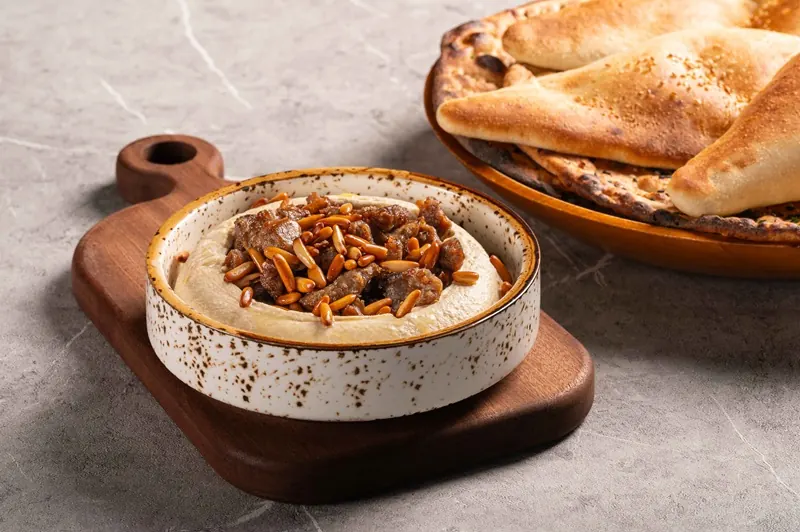
An Iraqi meal is built to be shared: every dish goes in the middle, bread is torn and used as a spoon, the guest is served first and the host keeps insisting on more. The dishes follow from the custom — whole masgouf, quzi on a tray, grill platters by the skewer. Here is how it works.
Because the meal belongs to everyone at it. Individual plates exist, but they are for collecting a little from each dish, not for a private portion. That is why so much of the menu comes whole or by the platter: a whole fish, a tray of rice and lamb, a grill platter counted in skewers.
Muruwwa (مروّة) is the Arab idea of generosity and noble character, and at an Iraqi table it means the host provides more than was asked for. A guest's plate is refilled before it is empty; "enough" is taken as politeness, not an answer. Guests are served first, and the best piece — the choice cut of lamb, the fish near the head — goes to them.
Tear a piece and use it to pick up hummus, meat or stew. Bread is the cutlery as much as the side. With tashreeb it is the base of the dish itself — tashreeb is bread soaked in broth.
Tea ends the meal. Iraqi tea is black, strong and sweet, served in small glasses — ours is AED 8.
By the size of the table, not by the number of mains. Planning an Iraqi meal for two, four or eight has worked examples with prices, and masgouf for a group covers the fish.
No. A little left over tells the host you were well fed.
With bread, often; masgouf is traditionally broken apart by hand. Cutlery is always fine.
From a table culture that is thousands of years old — The National's history of Iraqi food traces it, and so does our piece on the world's oldest recipes.