Heritage
The Oldest Written Recipes in the World Are Iraqi
Kabab Erbil · August 30, 2026
Kabab Erbil · August 30, 2026
The oldest written recipes ever found are Iraqi. Four clay tablets from southern Mesopotamia, three of them dated to around 1730 BC, carry cooking instructions in cuneiform — roughly 3,750 years old and about a thousand years older than any other surviving recipe. They are held in the Yale Babylonian Collection, and the best-preserved of them lists 25 stews.
The tablet catalogued YBC 4644 contains 25 stew recipes: 21 meat and 4 vegetable. They are written in Akkadian, the language of Babylon, and they are startlingly terse. There are no quantities and no cooking times — the tablets were written for professional cooks who already knew the work, the way a chef's notebook is written today rather than a cookbook for beginners.
The tablets reached Yale around 1911 and were not deciphered until 1942. Alongside the stews, the wider collection records breads and beverages, including beer.
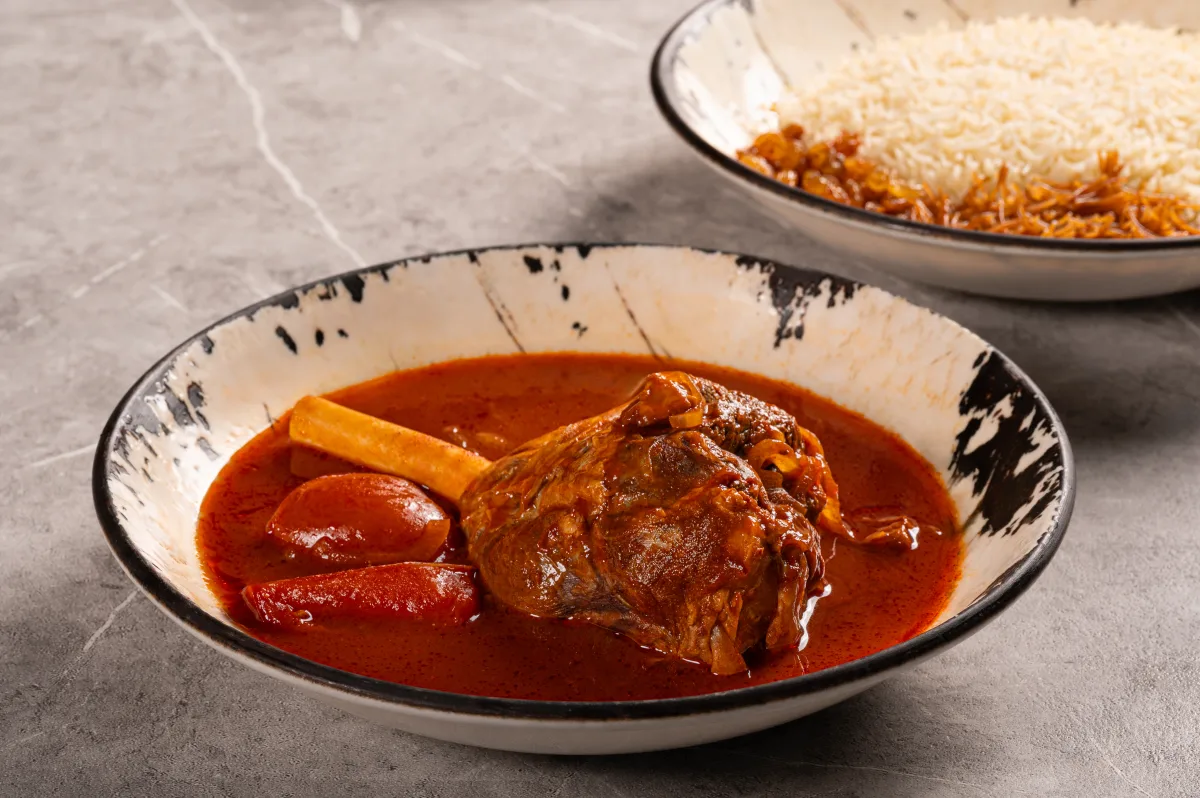
More than people assume. The tablets describe long-simmered meat stews finished with alliums and aromatics, eaten with bread. That is not a museum curiosity in Iraq — it is lunch. Quzi, tashreeb and patcha all belong to the same family: meat cooked slowly until it yields, served with bread or rice that carries the broth.
Three specific continuities are worth naming:
Depends what you are counting. Written recipes go back around 3,750 years, which is the world record and is checkable. Agriculture, settlement and cooking in Mesopotamia go back much further — the region is where wheat and barley were first farmed — but that is a claim about a place, not about a recipe anyone can read. We would rather cite the tablet than round the number up.
The Erbil Citadel is a UNESCO World Heritage Site and one of the longest continuously inhabited places on earth — people have lived on that mound without a break for thousands of years. Kurdish cooking from that region shares the Mesopotamian rice-and-stew structure while keeping its own emphasis: more yoghurt, more mountain herbs, and its own style of dolma.
That is the tradition the restaurant is named for, and the reason our menu carries Erbil dolma alongside the Baghdadi dishes.
Researchers have. Because the tablets give no quantities, any modern version involves interpretation — the ingredients are legible, the proportions are not. The results are reported as recognisably stew-like rather than alien.
Tashreeb, most likely — meat broth poured over bread, with no technique in between that would have puzzled a Babylonian cook. Quzi is the celebratory version of the same logic.
It overlaps but it is not the same thing. Mesopotamian cooking predates the Arabic culinary tradition it later joined, and it kept its own ingredients — dried lime, tamarind, river fish. We set the differences out in Iraqi vs Lebanese vs Syrian food.
Kabab Erbil has cooked Iraqi food in Dubai since 2003, from 10 Al Muraqqabat Street in Deira and Al Taawun Street in Sharjah, both open daily 09:00–03:00. If you want the dishes with the longest lineage, start with tashreeb, quzi and masgouf — or order online for delivery across Dubai and Sharjah.