Heritage
What is Iraqi Patcha? The Baghdad Weekend Dish Explained
Kabab Erbil · August 16, 2026
Kabab Erbil · August 16, 2026
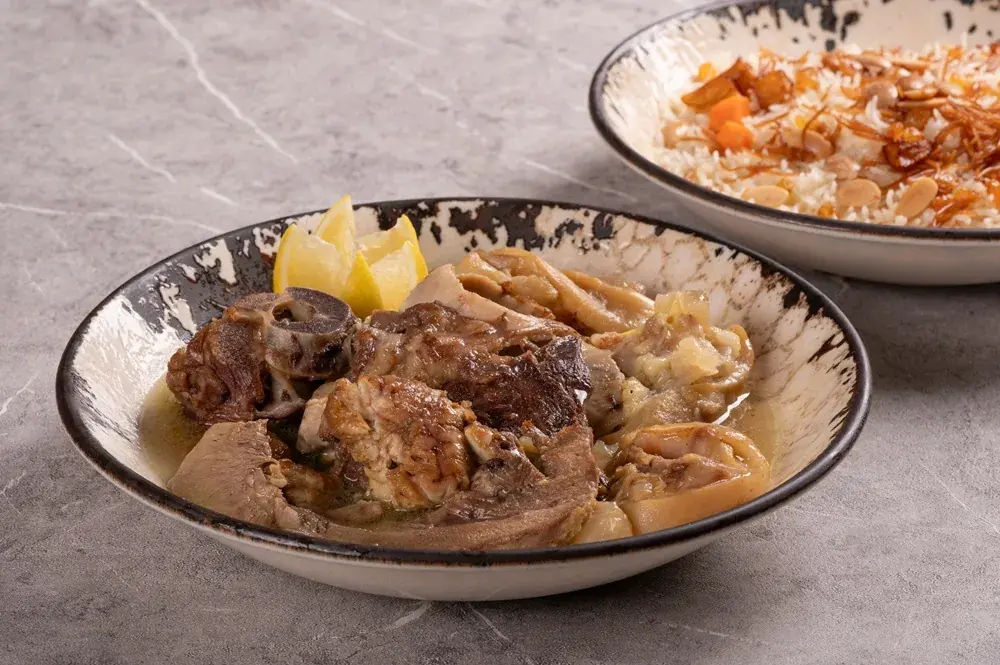
Patcha (باجة or باجه, sometimes written pacha or pache) is a slow-simmered Iraqi dish made from the whole sheep — head, trotters and stomach — cooked for hours until the meat falls apart, then served over torn bread with garlic and lemon. In Baghdad it is a weekend breakfast dish, eaten late morning, and it is one of the oldest continuously cooked dishes in Mesopotamian cooking.
The word is not originally Arabic. It comes from the Persian pācheh, meaning trotter or lower leg, and it travelled into Iraqi, Kurdish, Turkish and Azerbaijani kitchens along the same routes that carried so much else between them. Turkish kelle paça and Iranian kalleh pacheh are close cousins of the same idea. The Iraqi version is distinguished less by its ingredients than by how it is served: over bread, at breakfast, on a day off.
The traditional preparation uses the parts of the sheep that reward long cooking rather than fast heat:
Everything is simmered for hours with garlic, and the broth is finished with lemon. There are no shortcuts in the method: the collagen has to break down, and that takes time rather than technique.
Patcha is served with tashreeb — flatbread torn into a bowl and soaked in the hot broth until it softens. The bread is not a side. It is the base of the dish, and the broth is poured over it at the table. Garlic and lemon go on top, and pickles usually come alongside to cut the richness.
Because it is heavy and takes most of a morning to cook, patcha is weekend food. In Baghdad, patcha houses open early and are usually finished by early afternoon. It is a communal dish — ordered for a table, not for one person.
No, though they are almost always eaten together. Tashreeb is the technique — bread soaked in broth. Patcha is the specific dish of slow-cooked sheep parts that the broth comes from. You can have tashreeb with other stews; patcha is nearly always served as tashreeb. We cover the wider family in our guide to Iraqi rice and bread dishes.
Yes. It is a traditional dish of the Muslim-majority regions of Iraq, and every ingredient in it is halal when the animal is slaughtered accordingly. Everything served at Kabab Erbil is 100% halal.
For people who did not grow up with it, usually yes — the texture is soft throughout and the flavour is deeply savoury rather than spiced. If you are trying Iraqi food for the first time, the quzi or the charcoal kebab are the easier introductions, and our guide to Iraqi food in Dubai covers where to start.
Traditionally late morning at the weekend. In Dubai, treat it as a long, unhurried meal rather than a quick lunch.
Iraqi Patcha is on our menu at AED 100, and it is one of the dishes we are asked for most by Iraqi families in Deira. You can see it alongside the rest of the kitchen on the full Iraqi menu, or order it online for delivery across Dubai and Sharjah.
Kabab Erbil has been cooking Iraqi food in Deira since 2003 — the story of how the restaurant got there is in our own history on Al Muraqqabat Street. For context on the region the food comes from, UNESCO's listing for the Erbil Citadel is a good place to start.